






AI Music Agent for Beginners: Making Music Without Learning an Instrument or a DAW

Plenty of people have a strong sense of what they want a song to sound like without knowing a single chord name. A parent wants a birthday song with their kid's name in it.
A teacher wants a memorable tune to help a class remember multiplication tables. A hobbyist has a melody stuck in their head but no idea how to turn it into an actual recording. For all of them, the barrier was never creativity — it was the technical starting point. An AI Music Agent built for beginners removes that starting point entirely.
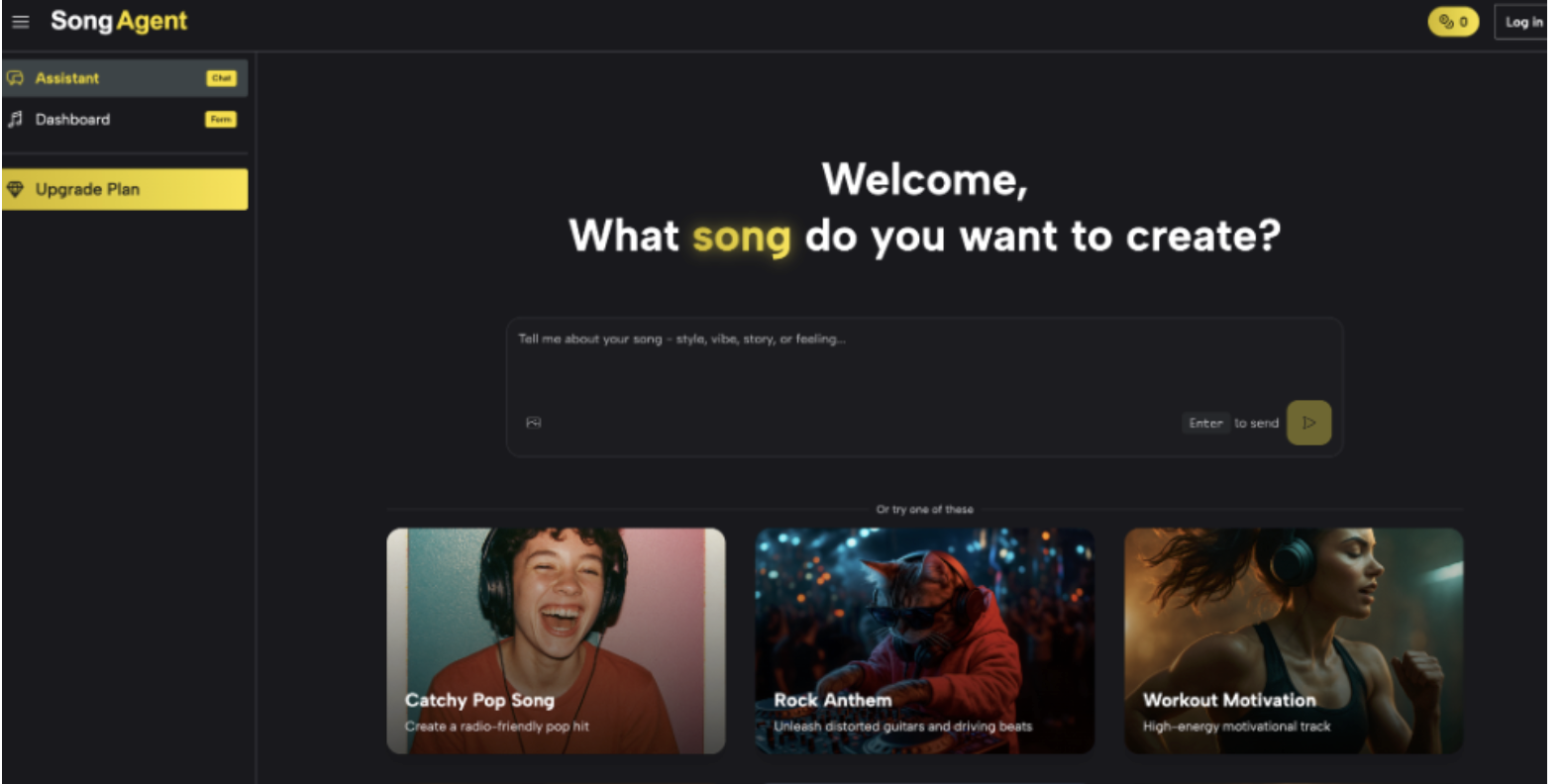
SongAgent describes its free tier as requiring no experience to begin, and its Simple Mode exists specifically for people without musical training. Rather than asking a first-time user to understand key signatures or arrangement before they can make anything, the system asks for a plain description of what they want and handles the musical decisions itself. This piece looks at what that actually means in practice — for hobbyists, educators, and anyone making their first song.
Why This Use Case Matters
The biggest reason most people never finish a musical idea isn't lack of talent — it's that turning an idea into an actual sound has traditionally required learning an instrument, learning production software, or paying someone else to do it. That barrier keeps a huge number of people from ever hearing their idea as a finished song, even when the idea itself is perfectly good.
SongAgent's own FAQ addresses this directly, stating plainly that no musical knowledge is required and that Simple Mode "caters specifically to absolute beginners" — the AI manages the technical complexity while the person only needs to describe their vision. This matters because it reframes who "gets to" make a song: not just people with training, but anyone who can describe a feeling, an occasion, or an idea in a sentence.
Where Traditional Methods Fall Short
For someone without a musical background, the traditional paths to making a song each require a significant investment before any results appear:
-
Learning an instrument takes months or years before someone can play, let alone compose, something that sounds like a finished song.
-
Learning production software means understanding a DAW's interface, audio routing, mixing, and mastering — a steep learning curve even before creative decisions come into play.
-
Hiring a musician or producer solves the skill gap but adds cost and scheduling, which is a lot of overhead for a birthday song, a classroom activity, or a personal hobby project.
SongAgent's positioning speaks to exactly this gap, describing itself as a way to "Stop Complex DAWs, Start Creating" and offering song creation that's free to start with no experience needed — removing both the skill barrier and the cost barrier for a first attempt.
How AI Music Agent Fits This Scenario
The Starting Point Is a Sentence, Not a Skill
A first-time user can describe a song as simply as: "an uplifting acoustic folk song with gentle guitar fingerpicking, warm vocals, and a hopeful melody." There's no requirement to know what key that should be in or what tempo fits — the description of mood and instrumentation is enough for the AI Music Agent to begin.
The Plan Comes Before the Guesswork
After a description is submitted, the system presents a musical blueprint — structure, instrumentation, key, tempo, and style — before generating the song. For a beginner, this preview step means there's no need to already know if a request will "work" musically; the plan shows what's about to happen in plain terms first.
Writer's Block Isn't a Dead End
The AI Lyrics Generator is built specifically for moments when someone has a theme or concept but can't find the words — it generates lyrics from keywords or concepts that align with the song's intended mood and style, which is often the actual sticking point for a first-time songwriter, not the melody.
Feedback Doesn't Require Technical Vocabulary
Once a song exists, refinement happens through plain requests like "make the chorus more energetic," rather than requiring someone to know audio engineering terms to ask for a change. This matters most for beginners, who are far more likely to know what they don't like than to know the technical fix for it.
Realistic Use Cases
-
Hobbyist songwriters with no formal training can turn a melody idea or a personal story into a finished, listenable song without first learning an instrument or software.
-
Elementary and classroom educators can build subject-specific songs — SongAgent's own example includes multiplication set to pop melodies and geometry set to folk tunes — as memorable, engaging teaching material.
-
Parents and individuals making personal or occasion-based songs (a birthday track, a tribute, a personal message set to music) can generate something custom without hiring a musician for a one-time request.
-
Anyone stuck on lyrics but confident about a concept can use the AI Lyrics Generator to move past writer's block, using a theme or keyword set as the starting point instead of a blank page.
-
First-time creators testing the format before committing can use the free tier to make an initial song at no cost, experiencing the full process before deciding whether to unlock commercial rights or higher-quality exports.
What Makes It Useful in Practice
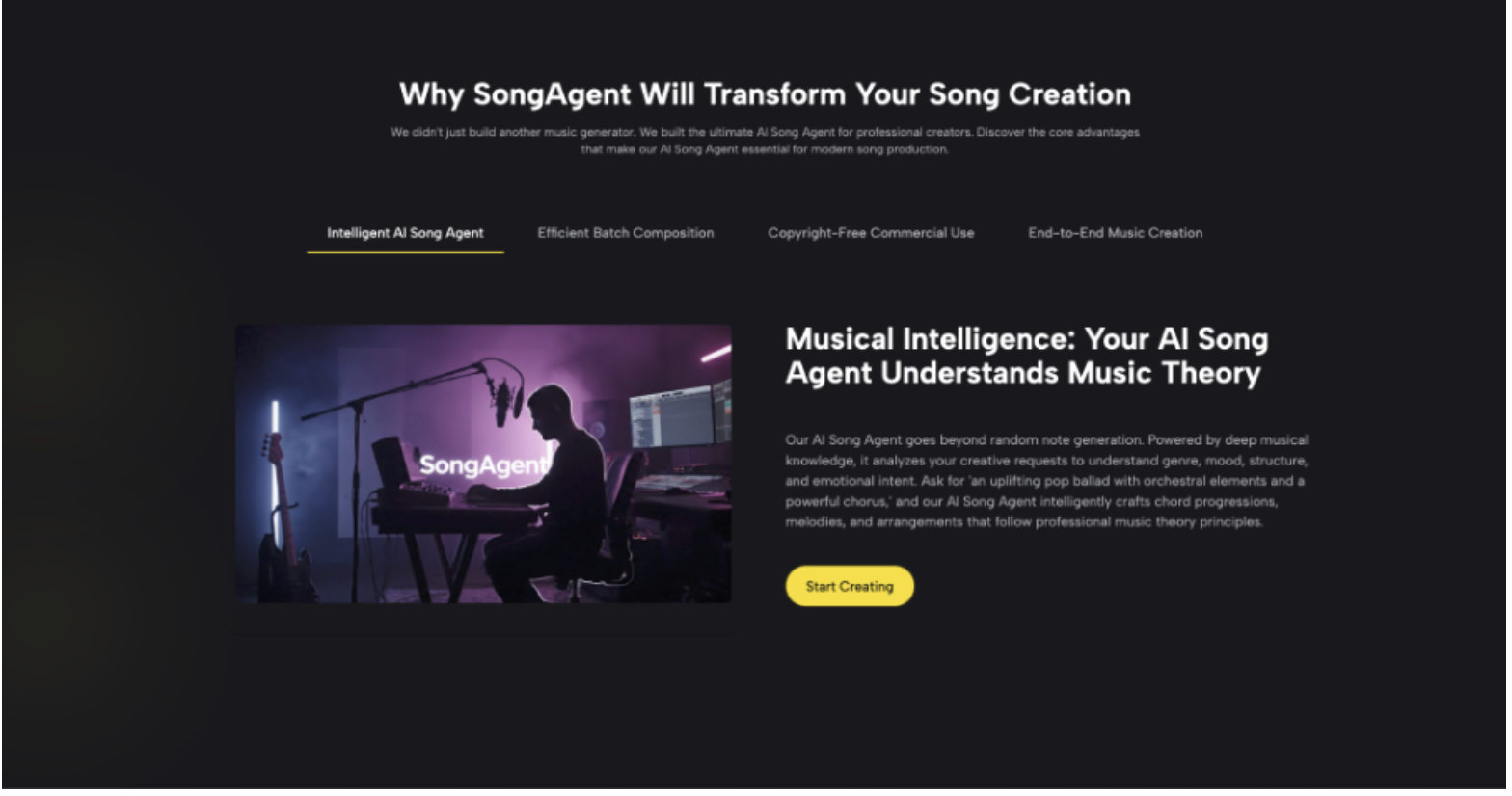
It doesn't punish inexperience with a worse result. Because the AI Music Agent applies music theory principles regardless of how the request is phrased, a simple, non-technical description can still produce a professionally structured song — the burden of musical correctness sits with the system, not the user.
It teaches by demonstration, not instruction. Seeing the musical blueprint before generation — structure, key, tempo — gives a beginner a plain-language look at musical decision-making, even if they never study those concepts formally elsewhere.
It lowers the cost of a first attempt to zero. Being free to start means the natural hesitation around trying something unfamiliar doesn't come with a financial cost attached, which matters most for someone who isn't sure yet whether this is something they'll keep doing.
It scales up if the hobby becomes more serious. The same AI Music Agent that supports a first free song also supports Custom Mode, commercial licensing, and higher-quality exports on paid plans, so someone who starts as a beginner doesn't have to switch platforms if their interest grows.
Conclusion
For beginners, the value of an AI Music Agent isn't measured in technical sophistication — it's measured in whether someone who has never made a song before can actually finish one. SongAgent's Simple Mode, lyrics assistance, and plain-language refinement process are built around exactly that first attempt, removing the instrument, software, and cost barriers that have traditionally stood between an idea and a finished track. If you've got an idea you've never known how to turn into music, the most direct way to find out what it could sound like is to describe it to the AI Music Agent and see the plan it comes back with.